
A hot bedroom can turn a perfectly ordinary evening into a struggle to get comfortable. An air conditioner can help, but choosing one takes a little more thought than picking the biggest number on the box. You still need somewhere to install it, enough room to live around it and an electricity bill you can manage.
We've put together four options for different homes and budgets, from a small window unit to a portable model with extra features. We'll walk through what each one offers, where it falls short and the things worth checking before you order.
This guide is for shoppers in the United States. We researched these models in November 2026 for people planning a purchase in 2027. They are not necessarily new 2027 releases, and prices can change.
We haven't tested these air conditioners ourselves. Our guide draws on manufacturer information, energy-efficiency records and independent reviews where available. We explain the limitations rather than presenting every model as a winner.
Affiliate disclosure: As an Amazon Associate I earn from qualifying purchases. This article contains affiliate links.
First, think about where your AC will go
Before comparing brands, take a look at your window. Can it safely hold a window air conditioner? Does your building allow one? Or would a floor-standing portable unit be more practical?
A portable AC still needs to send hot air outdoors through a hose. It also takes up floor space, so picture where it would sit before buying. If your room is already tight, a large unit and its hose can make it harder to get around.
Here's a quick way to navigate the options:
- Frigidaire FHWC054TE1: a simple window unit for a small room.
- LG LW8024IVSM: a window inverter model to compare for regular use.
- Whynter ARC-14S: a portable option to consider carefully if the price is right.
- Whynter NEX ARC-1230WNH: a more feature-rich portable, with limits to its heating mode.
These units serve different rooms. Buying a smaller AC to save money won't help if it cannot cool your space, and a bigger machine isn't automatically a better fit.
1. Frigidaire FHWC054TE1: keep things simple in a small room
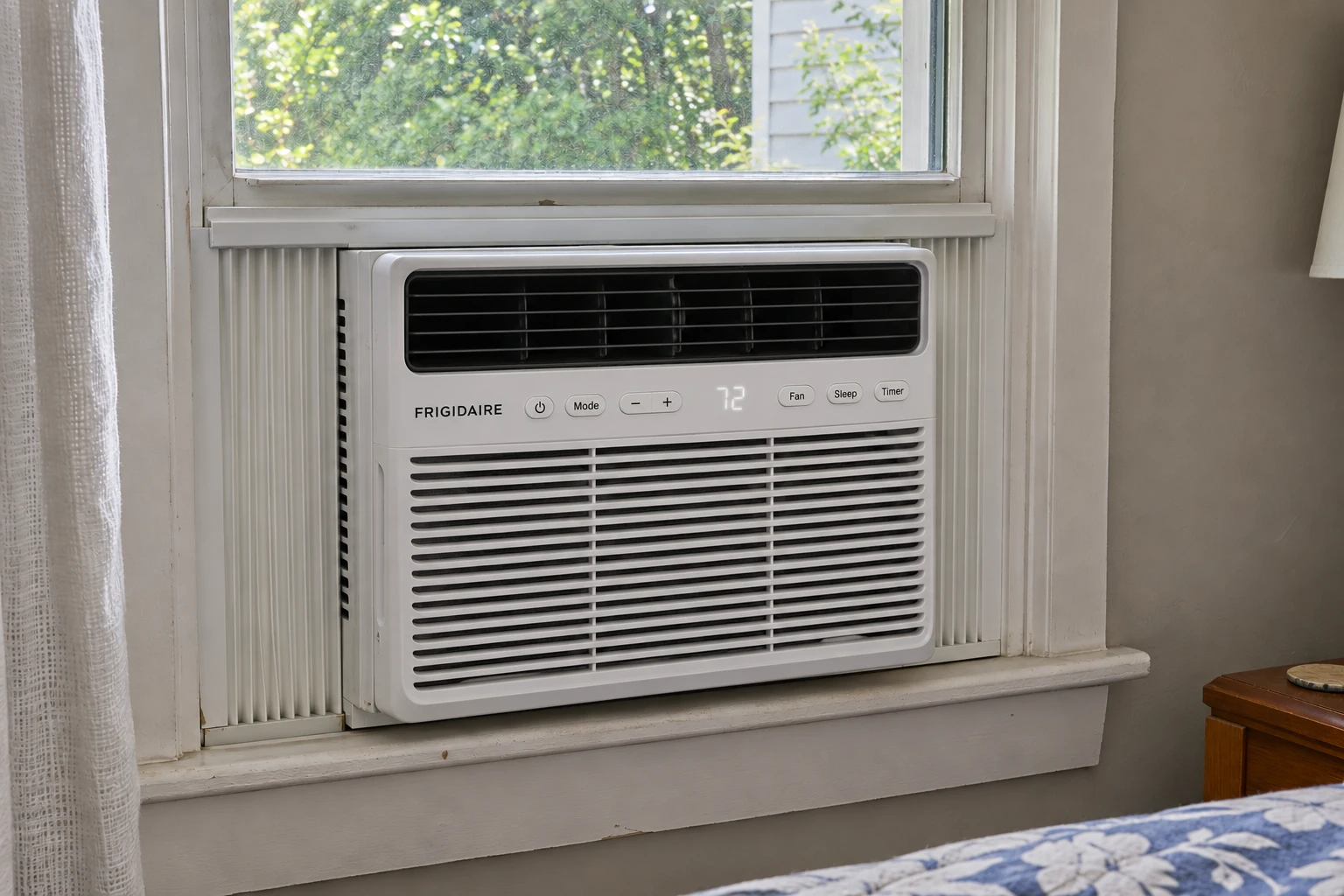
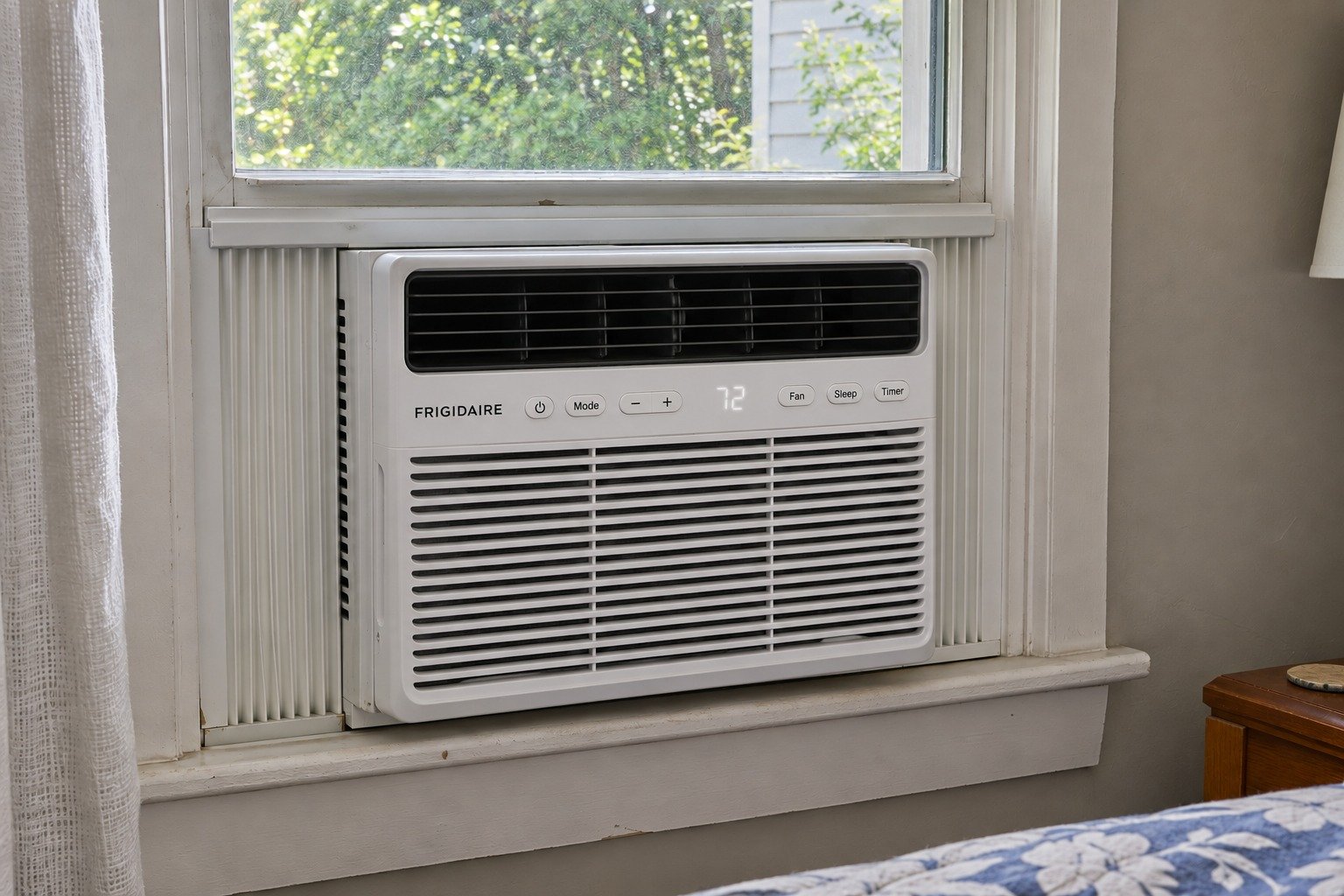
If you want to cool a small bedroom without learning another app, this Frigidaire is a straightforward place to start. It has a remote, a timer and an energy-saving mode. There's no Wi-Fi or heating to pay extra attention to.
Its 5,000-BTU rating tells you that it's a small-capacity unit. Frigidaire describes it as suitable for rooms up to 150 square feet, but a sunny room or a particularly hot upper floor may need a different choice. It uses a 115-volt supply.
What makes it worth a look?
The appeal is a familiar setup with everyday controls. If the window fits and the room is small enough, you may not need the capacity or features of a larger model.
There is also an independent RTINGS review of this exact model, which gives you more to work with than a product description alone. That doesn't make it the current best budget choice. RTINGS replaced it with another model in its window-AC budget recommendation in October 2026, so compare the current offer rather than relying on an old award.
What should you check?
Measure the window opening. The specification sheet calls for a width of 23–36 inches and a minimum height of 13 inches. Make sure the window type and support arrangements also meet the instructions.
This model has a conventional compressor, so you may notice it cycling on and off as it maintains the temperature. If those changes bother you at night, consider that alongside the price.
Our view: a small-room option worth comparing when the offer is competitive, not a reason to skip looking at alternatives.
See the Frigidaire FHWC054TE1 on Amazon (opens in a new tab)
Sources: Frigidaire specification sheet (opens in a new tab) and RTINGS window-AC guide.
2. LG LW8024IVSM: an option for rooms you cool every day
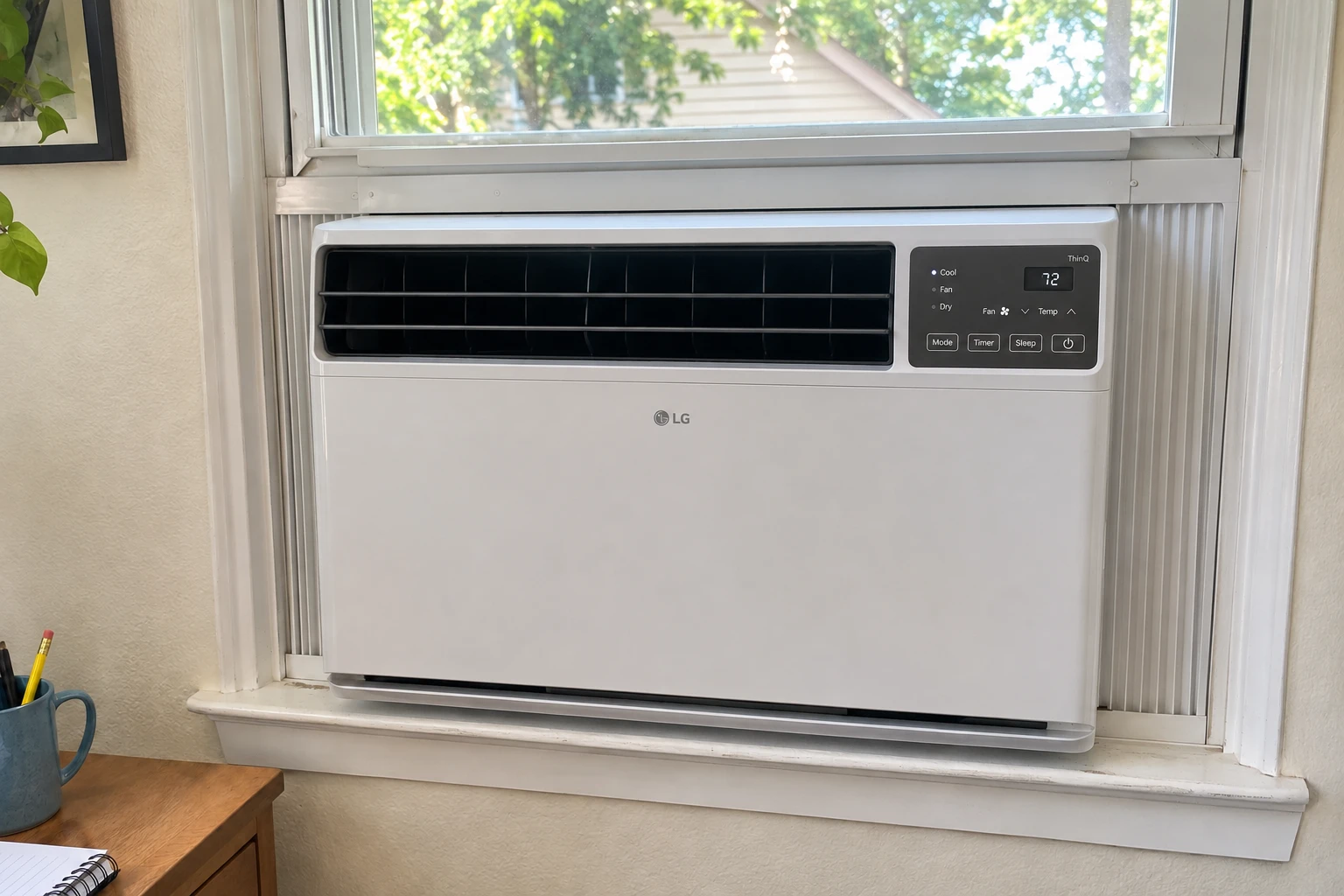
If your air conditioner runs most afternoons or nights, it's worth thinking about how it works once the room is comfortable. The LG LW8024IVSM uses an inverter compressor, which can adjust its output rather than relying only on repeated full-power starts and stops.
That gives it a different approach from a basic window unit. It also has Wi-Fi controls through LG's ThinQ app, which may be useful if you like setting schedules or adjusting things from your phone.
The ENERGY STAR record lists this model at 8,500 BTUs, with a 115-volt supply and an efficiency rating called CEER of 15.0. CEER is simply one way to compare energy efficiency under a standard test. It helps with shopping, but it won't tell you exactly what your next electricity bill will be.
Why consider the LG?
It brings together an adjustable compressor and connected controls in a window unit. For regular use, those are useful features to compare with a basic model, especially if the price difference isn't too large.
Still, we found limited independent test evidence for this exact LG. Its certified efficiency figure is useful, but it doesn't prove that it will be the quietest or most reliable option in your home.
What should you check?
Read the mounting instructions and measure the window carefully. Room-size estimates differ between the manufacturer page and some store listings, so don't use a single advertised square-foot number as a guarantee.
Also check the full model number: LW8024IVSM. Some listing details conflict with the model's certified capacity. And while LG advertises a low sound level in a particular operating mode, you should expect the noise to change with fan speed and cooling demand.
Our view: an option to investigate for frequent use, with a closer look at recent feedback and the current price before you decide.
See the LG LW8024IVSM on Amazon (opens in a new tab)
Sources: LG (opens in a new tab) and ENERGY STAR (opens in a new tab).
3. Whynter ARC-14S: a portable option with trade-offs to think about
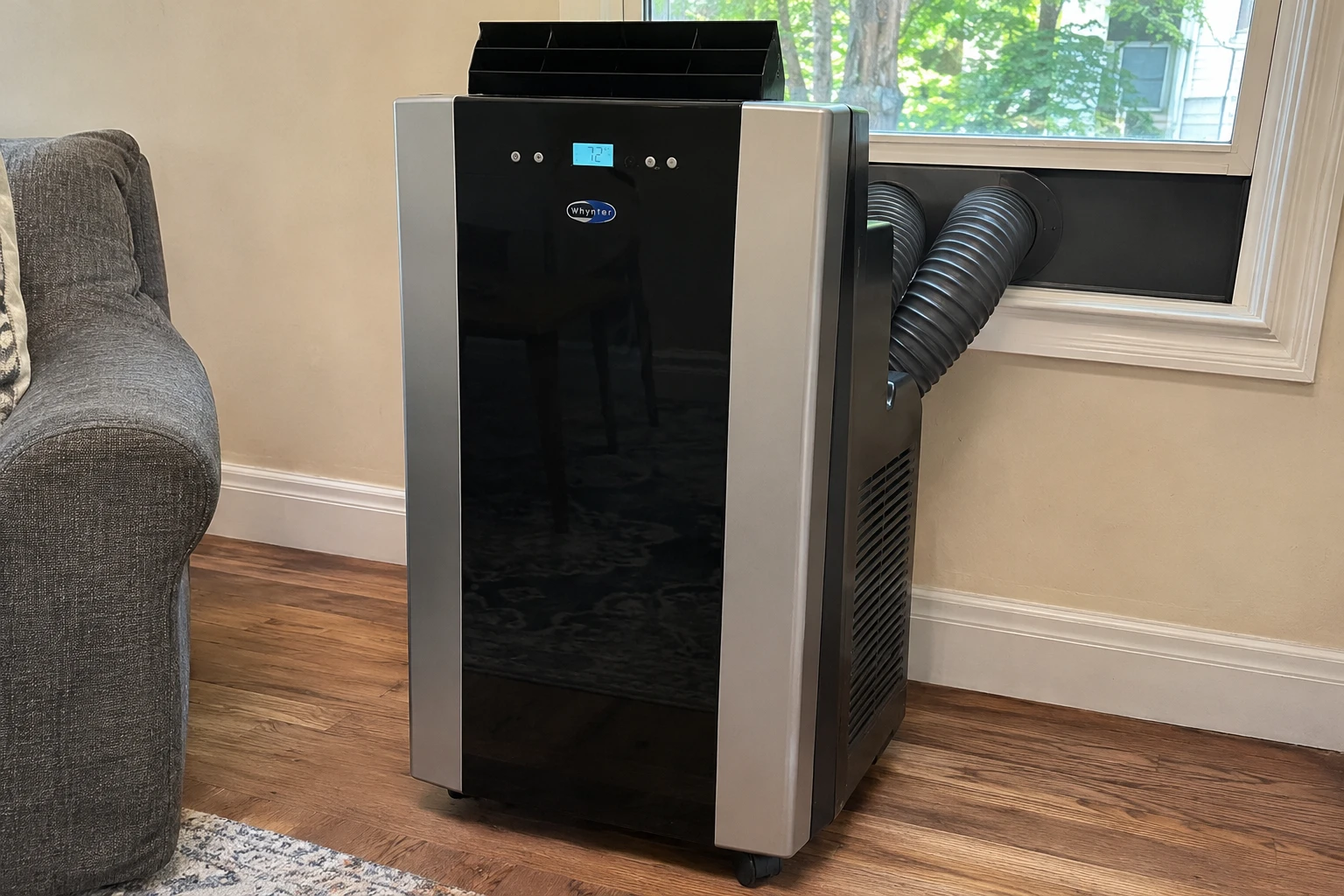
A portable air conditioner can be useful when a window-mounted unit won't work in your home. The Whynter ARC-14S sits on the floor and uses two hoses connected to the window. It cools and dehumidifies, but it doesn't heat.
You'll see two capacity numbers for this unit: 14,000 BTUs under one test method and 9,500 BTUs under the more useful portable-AC comparison measure, called SACC. You don't need to memorize the initials. Just look for the SACC figure when comparing it with another portable, so you're comparing like with like.
When could it make sense?
If a portable layout is what your home allows and this model is substantially cheaper than a suitable inverter alternative, it may deserve a look. But the discount matters because there are important drawbacks.
In its test of the ARC-14S, RTINGS raised concerns about operating noise and power consumption compared with inverter alternatives. For a bedroom where you're sensitive to sound, or a room you cool for long hours, those are good reasons to pause before buying.
What should you check?
Leave enough space for the machine and both hoses. It weighs 73 pounds, so moving it upstairs isn't a small job. You'll also need to fit the window kit properly and follow the drainage instructions.
Check the label and accessories on the actual offer. This model has been around for a while, and older manuals or listings may describe a different revision.
Our view: a conditional choice if the installation suits your room and the price makes the drawbacks worthwhile. It isn't our default recommendation for quiet nights or low running costs.
See the Whynter ARC-14S on Amazon (opens in a new tab)
Source: Whynter product information (opens in a new tab).
4. Whynter NEX ARC-1230WNH: more features, but not an all-weather heater
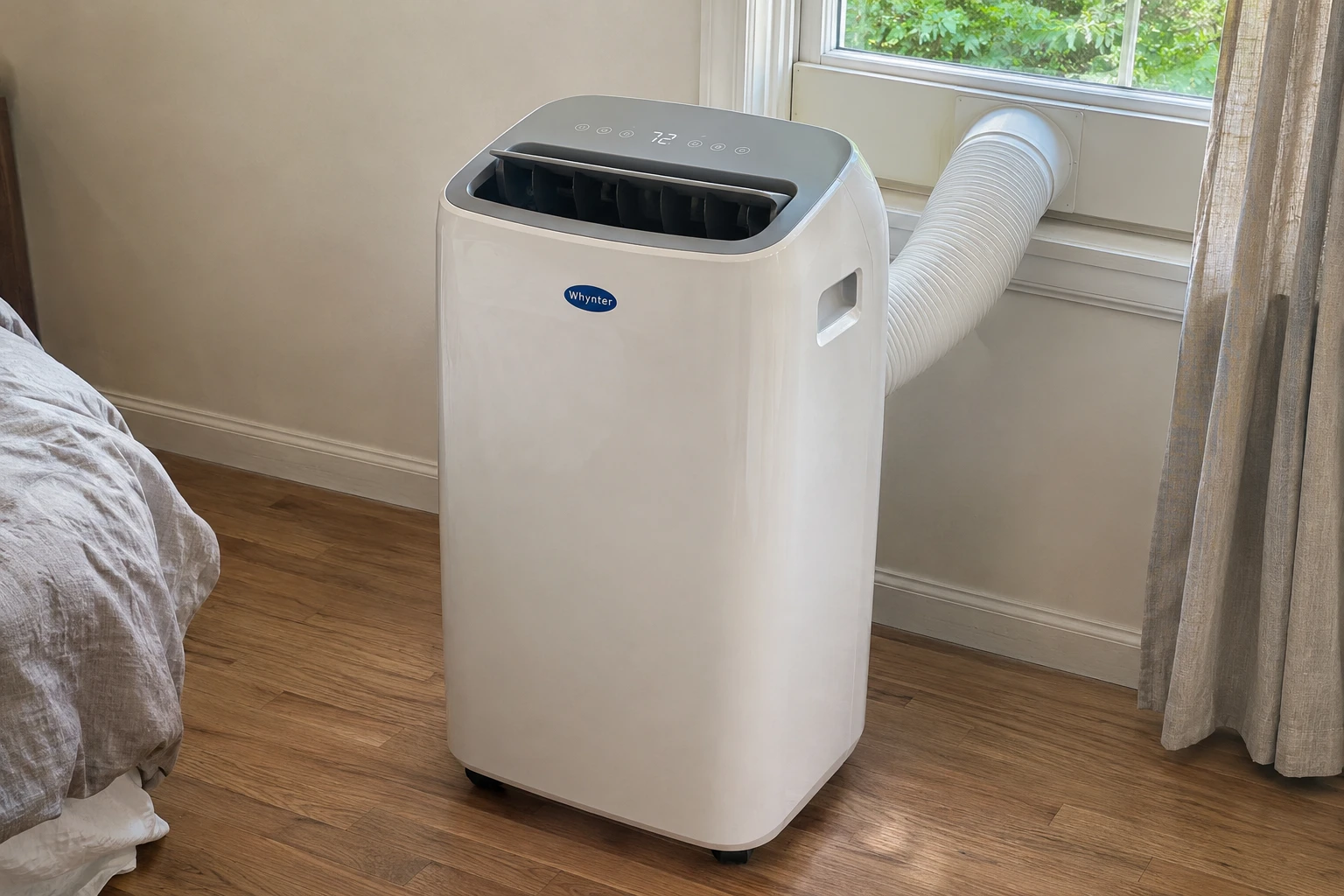
The NEX ARC-1230WNH adds an inverter compressor, Wi-Fi and heating to the portable format. That may sound like a convenient way to use one appliance through more of the year, but the heating limits deserve attention before you pay extra.
Whynter specifies heating in conditions above 41°F, or 5°C. Think of it as additional warmth for milder weather, not a replacement for dependable heating through a cold winter.
For cooling, the unit is rated at 12,000 BTUs SACC. The larger 14,000-BTU number you may see comes from another test method. It uses a two-hose arrangement inside a single larger hose assembly and runs on a 115-volt supply.
Why put it on your shortlist?
It offers more control than a basic portable: an adjustable compressor, app functions and that extra heating mode. If you need a portable and will actually use those features, it is worth investigating.
However, owner feedback is mixed. The reviews we consulted include complaints about heating, support and early faults as well as positive experiences. Those reports don't tell us the overall failure rate, but they make it important to check the return terms and warranty rather than buying on the feature list alone.
What should you check?
Allow for a machine weighing more than 77 pounds, its hose assembly and the required space around it. Read the drainage instructions for the mode you'll use. The quietest sound figure in the advertising applies to low operation, not every situation.
Be careful with reviews, too. The cooling-only ARC-1230WN is not the same model as the ARC-1230WNH here. A good test result for one shouldn't automatically be credited to the other.
Our view: a feature-rich portable to consider with care, especially if heating is part of your reason for buying. Check the seller, recent reviews and return conditions before committing.
See the Whynter NEX ARC-1230WNH on Amazon (opens in a new tab)
Sources: Whynter (opens in a new tab), manufacturer's manual (opens in a new tab) and owner reviews consulted (opens in a new tab).
A few checks that can save you an expensive mistake
Match the AC to the room
Start with room size, then consider direct sun, ceiling height, insulation and people or equipment adding heat. A rough square-foot recommendation is a starting point. The US Department of Energy's guidance (opens in a new tab) can help you understand sizing before you buy.
Don't compare every BTU number the same way
A portable and a window unit can both advertise 14,000 BTUs without delivering the same result in the room. For portable models, compare SACC figures with one another. For window units, stick to the relevant room-size and capacity guidance. It is better to make one careful comparison than to pick the largest number.
Think about everyday comfort
Will the unit sit beside your bed? Will its hose cross the space where you normally walk? Can you reach the controls and clean the filter comfortably? Those details are easy to miss in a product photo, but you'll notice them every day.
Check the full cost
Look at delivery, any mounting equipment and installation requirements as well as the price of the unit. Confirm that the electrical supply is suitable and follow the manufacturer's instructions. Don't improvise an unsafe connection to make an appliance fit.
Running costs matter, too. Weather, room conditions, temperature settings and hours of use all affect the bill. A standard efficiency rating helps you compare, but it isn't a personal savings guarantee.
Questions you might still have
Is a window AC better than a portable?
Often the first question is what you can safely install. A window unit leaves more of your floor free. A portable stays indoors and still needs an outdoor vent, but may fit a situation where a window-mounted appliance isn't allowed or practical. Check the building rules and the installation instructions first.
Can a portable air conditioner work without venting outdoors?
It needs an approved way to send the heat outside. Leaving the exhaust hose in the room won't give you the cooling setup the appliance was designed for.
Will an inverter model definitely save me money?
Not in every situation. Compare its actual efficiency rating, price and expected hours of use. Paying more for efficiency may be worthwhile with frequent use, but the result depends on your electricity costs and home.
Can I buy these models for use outside the US?
This selection is for the US market. Power supplies, window designs, warranties and delivery options differ elsewhere.
Why is this a 2027 guide?
It's for readers planning ahead for 2027, based on information checked in November 2026. We aren't claiming to know future prices or to have tested next year's launches.
Choose for the home you have
You don't need the longest feature list to feel more comfortable. You need an AC that suits the room, fits safely and works with your budget. Start there, then decide whether an app, quieter low-speed operation or a heating mode is something you'll actually use.
Before ordering, take one final look at the model number, seller, included installation kit and return policy. A few minutes spent checking now can save a frustrating return later.