A cleaning cloth comes out of the wash covered in lint. Another gets folded away while it is still damp. Buying a bigger pack will not fix either problem on its own. A useful cloth routine includes what happens after the wiping is done.
Start with the care directions for the particular cloth. Water temperature, bleach allowance and drying instructions can differ, even when several products are all described as microfiber.
Keep the jobs separate
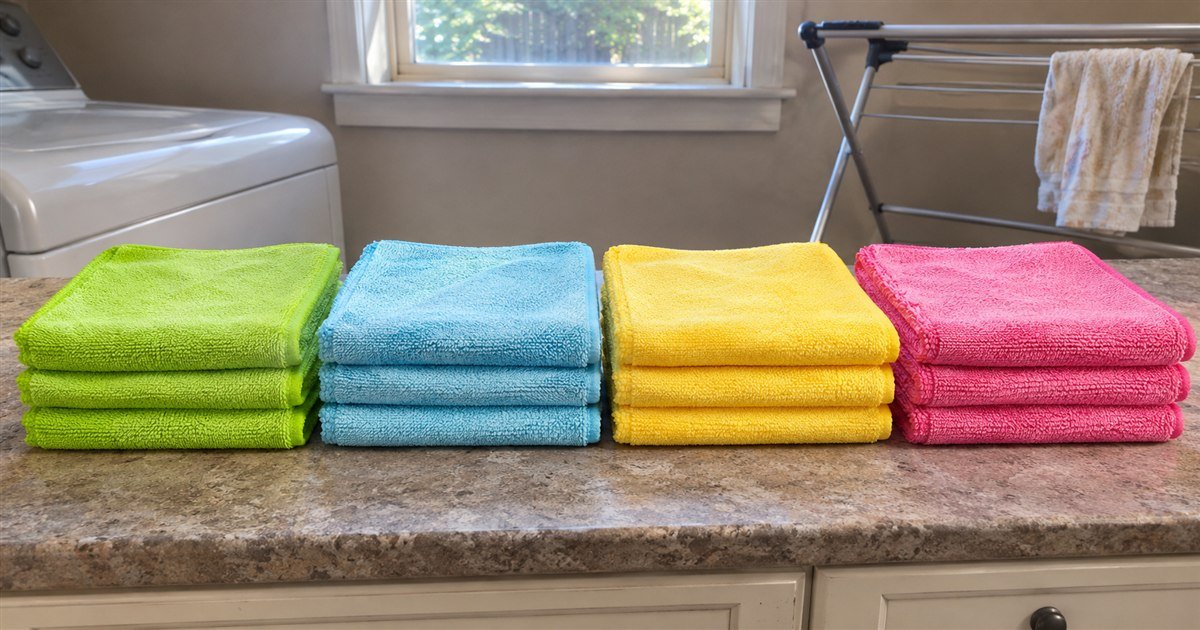
Give kitchen, bathroom and general household cloths their own jobs, then keep that distinction when washing and storing them. Do not mix a greasy rag with the cloth you reserve for finishing a mirror. Colors can make the system easier to remember, but you still need to know which cloth goes where.
Check for trapped grit before returning a cloth to a surface. A soft cloth carrying a hard particle can leave marks. Remove debris and wash the cloth rather than simply turning the dirty part inward.
Read the washing and drying directions together
The MR.SIGA listing specifies warm-water hand or machine washing with mild detergent, separately from other items. It says to avoid bleach and fabric softener, and not to tumble dry or iron these cloths. The Amazon Basics listing, meanwhile, tells buyers to wash the cloths separately before first use and with like colors afterward.
The E-Cloth kit has its own directions, including no fabric softener or dryer sheets, and permits tumble or hang drying. E-Cloth’s care instructions (opens in a new tab) apply to that kit. They should not override the different drying directions for another brand.
Read both parts of the label before starting a load. Follow the detergent directions, rinse thoroughly and choose the drying method allowed for the cloth you actually have.
Let cloths dry before putting them away
Open them out after washing instead of leaving a damp bundle in the sink. Give them room to dry in the way their care instructions allow. Check folds and thicker areas before closing the drawer.
A clean, dry shelf or a simple drawer divider can keep the cloths organized by job. There is no need to buy a storage system if the space you already have works. Replace cloths that are damaged or can no longer be cleaned adequately.
Three options for different needs
These selections are based on published specifications and care directions. We have not tested their absorption, wash life or long-term durability. You do not need all three; choose the format that fills a gap in your routine.
MR.SIGA: a multicolor set for regular use
This 12-pack contains square cloths measuring 12.6 × 12.6 inches. The four colors can help you assign different cleaning jobs, while a dozen cloths gives you some rotation between washes. It can still be more than a small household needs, so count your existing usable cloths first.
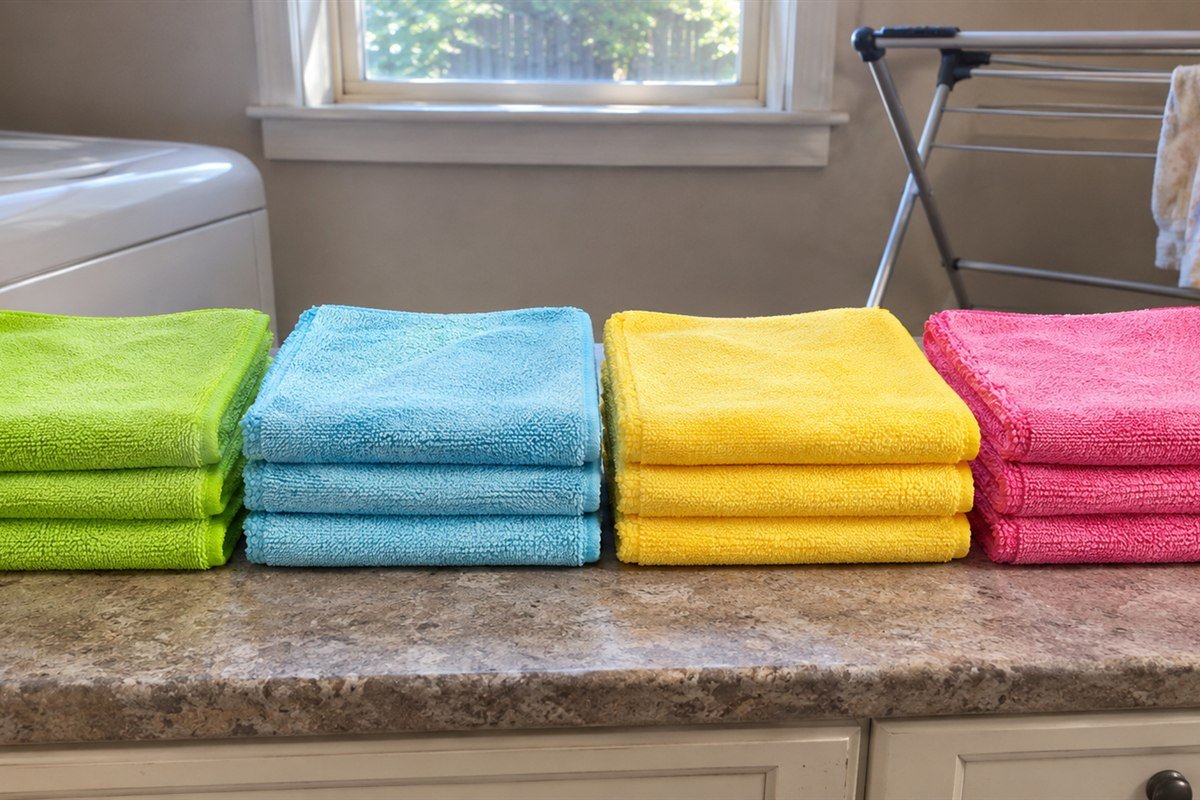 (opens in a new tab)Illustrative image — AI-generated setting.
Amazon US
MR.SIGA microfiber cleaning cloths: multicolor 12-pack
A moderate-size set with colors you can assign to different cleaning jobs.
- 12 square microfiber cloths
- 12.6 × 12.6 inches (32 × 32 cm)
- Follow the hand- or machine-wash care directions
Check price
Price, stock, shipping and returns are set by the store.
View offer on Amazon US (opens in a new tab)Checked November 14, 2026
Affiliate links: we may earn a commission on purchases at no extra cost to you.
Amazon Basics: a larger supply to keep organized
The blue, white and yellow 24-pack is an alternative for someone who regularly works through several cloths and has room to store clean ones. Its larger count is also the drawback: it adds laundry and storage without helping if most of the pack will stay unused.
Check the exact count and color assortment on the listing. A large pack is not automatically better value for your household if a smaller set already covers your jobs.
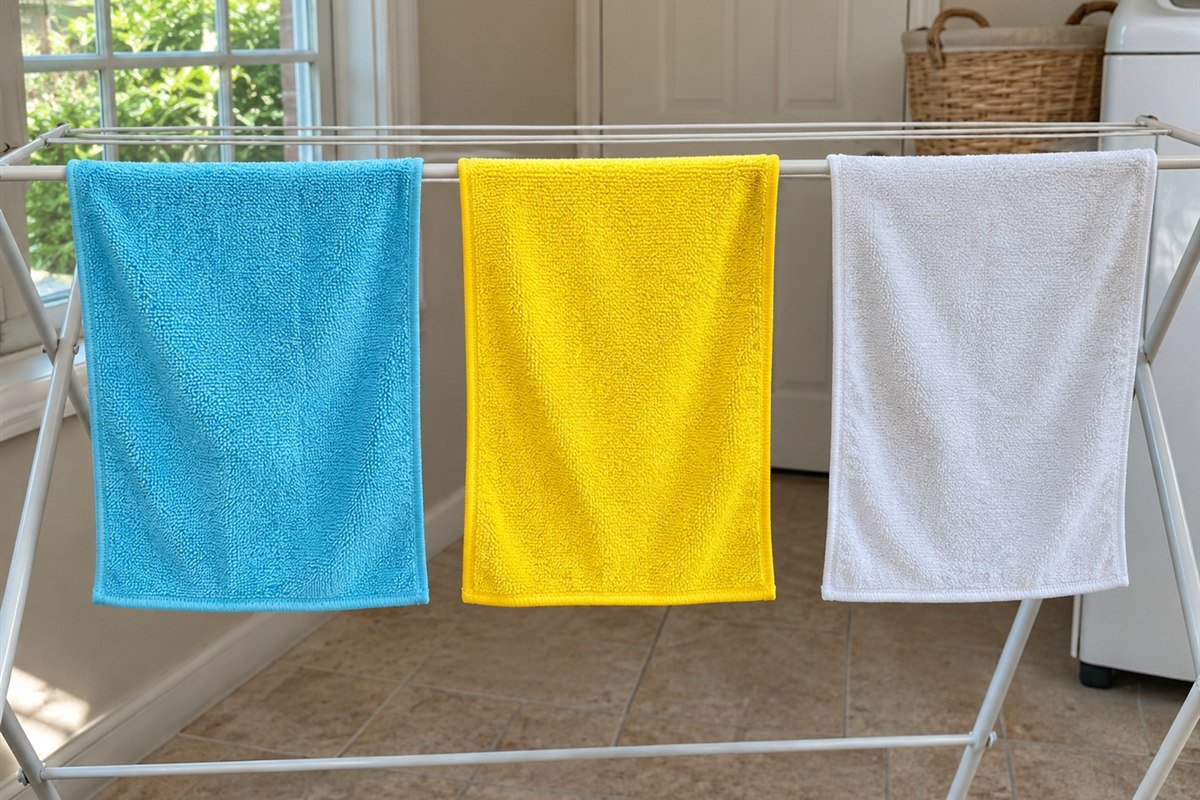 (opens in a new tab)Illustrative image — AI-generated setting.
Amazon US
Amazon Basics microfiber cleaning cloths: 24-pack
A larger supply for households that have space and a regular washing routine.
- 24 reusable microfiber cloths
- Blue, white and yellow assortment
- Machine washable; wash separately before first use
Check price
Price, stock, shipping and returns are set by the store.
View offer on Amazon US (opens in a new tab)Checked November 14, 2026
Affiliate links: we may earn a commission on purchases at no extra cost to you.
E-Cloth: two cloths with separate roles
The Alaskan Blue Window Cleaning Kit contains a waffle-weave Window Cloth and a smooth Glass & Polishing Cloth. The manufacturer describes a two-step method: clean with the first cloth dampened with water, then finish with the second one dry.
That is useful when you want a dedicated glass routine rather than another general-purpose bundle. It is not a replacement for a large supply of everyday rags. Keep the two roles clear, and follow the surface manufacturer’s instructions too.
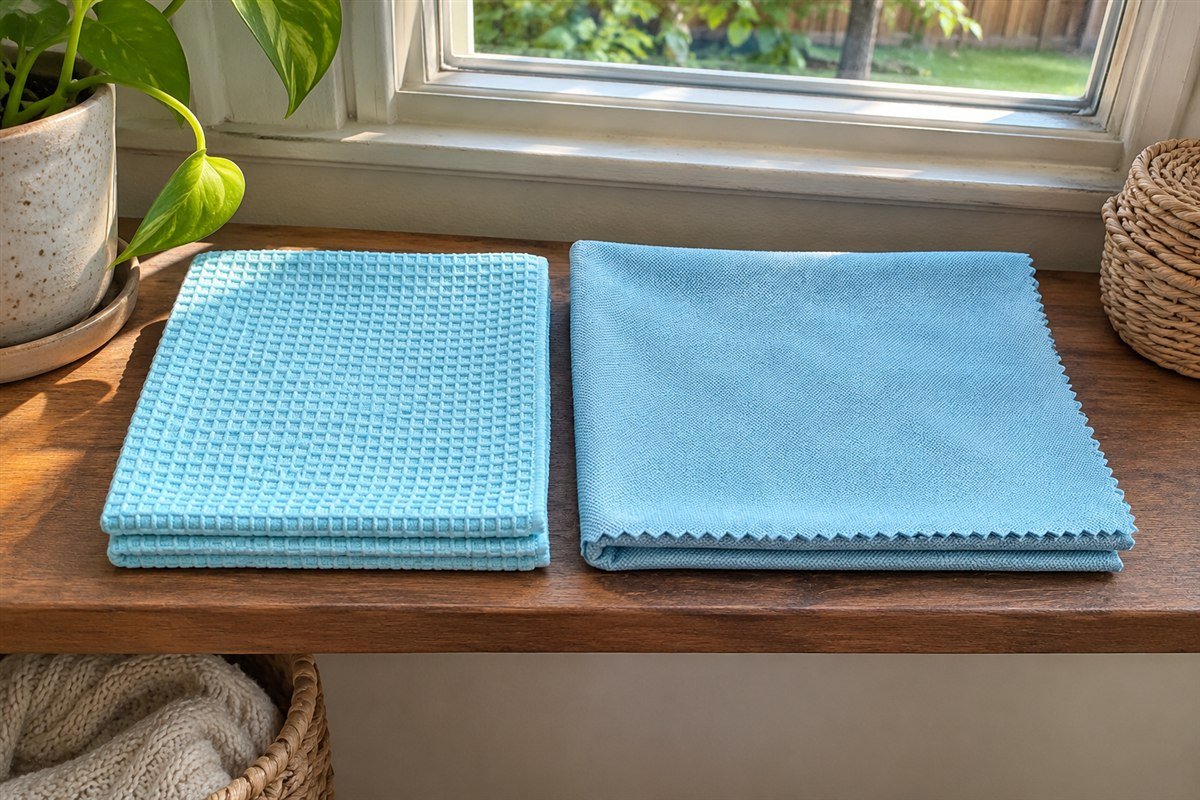 (opens in a new tab)Illustrative image — AI-generated setting.
Amazon US
E-Cloth Window Cleaning Kit: Alaskan Blue
Two different cloths for a damp cleaning step followed by dry glass polishing.
- One Window Cloth and one Glass & Polishing Cloth
- Alaskan Blue kit
- Washable; follow the kit’s own care instructions
Check price
Price, stock, shipping and returns are set by the store.
View offer on Amazon US (opens in a new tab)Checked November 14, 2026
Affiliate links: we may earn a commission on purchases at no extra cost to you.
Make the next use easy
When a cleaning job is finished, send the used cloth for washing, let it dry and return it to its assigned place. Inspect the fabric before the next job. A manageable set of well-cared-for cloths is easier to use than a crowded drawer of uncertain ones.