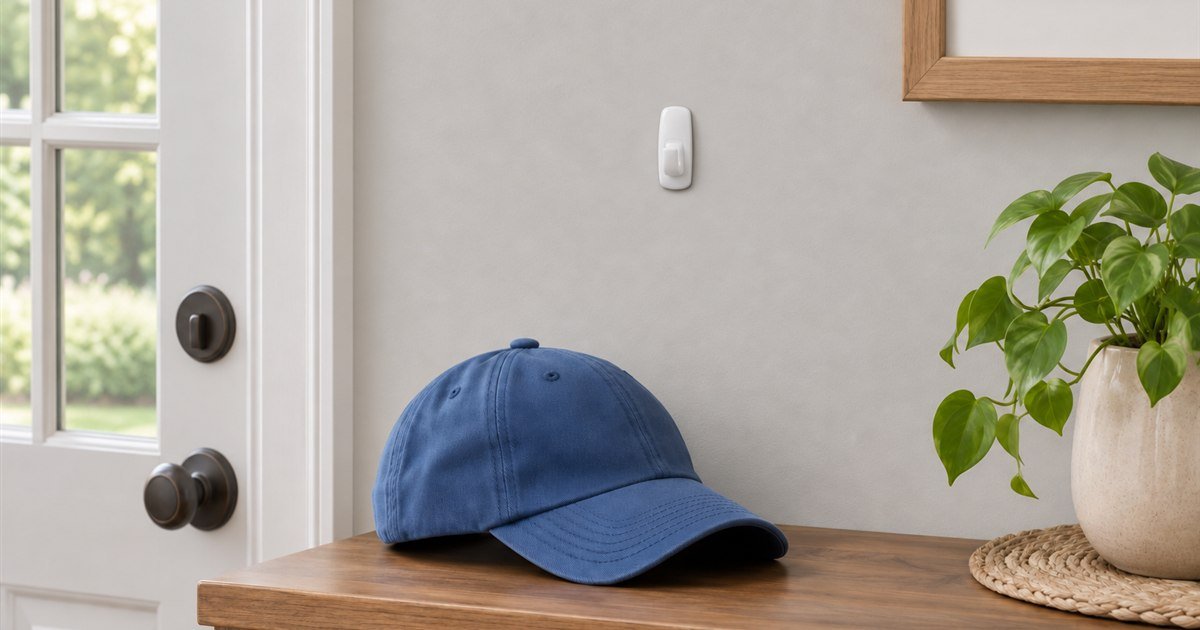
A cap lands on the entryway table every afternoon, right beside the mail. One hook could give it a regular home. The useful question is not how many hooks fit on the wall, but whether one well-placed hook suits the item and the finish underneath it.
Before buying a pack, hold the cap where you would actually reach for it. Check the door swing and the space around the console. A spot that looks tidy in an empty room may be awkward when you come home carrying groceries.
Start with the wall, then choose the hook
Command lists smooth, finished indoor surfaces such as painted walls, finished wood, glass, tile and metal. Rough brick, wallpaper and unfinished wood need a different solution. Newly painted surfaces must be fully cured; check the paint maker's timing as well as the hook instructions. Read Command's US surface guidance (opens in a new tab).
Look at the exact patch where the backplate will sit. A trim edge or tile joint can interrupt the contact area even when the surrounding surface seems suitable. If the finish is loose or damaged, moving the hook a few inches does not necessarily solve the underlying problem.
Choose a job that will stay the same
A hook for one cap is easy to understand. An open-ended spot for backpacks, shopping bags and whatever arrives next is harder to keep within a rating. Decide what belongs there before choosing the capacity.
Weigh the complete item you intend to hang. A bag's contents count too. Command's guidance does not support adding the ratings of several hooks to hold one heavier item. More strips are not a shortcut to a higher rating either. If the intended load exceeds the package limit, choose a support designed for that job.
One US option: Command Large Utility Hook 17003ES
The white 17003ES listing checked for this article contains one large utility hook and two strips. It is rated for up to 5 lb per hook. Command identifies the large utility hook as product 17003, and its US weight-limit guide (opens in a new tab) lists the 5 lb capacity. See the manufacturer's product page (opens in a new tab).
It is a straightforward option when a single everyday item, the surface and the placement all match its directions. Two supplied strips do not mean two hooks are included. Check the selected pack before ordering: similar product photos can hide a different quantity or model.
This is a recommendation based on the listing and manufacturer specifications. We have not tested long-term hold or removal on different paints. A modest hook is useful only if its particular limits suit the place you have in mind.
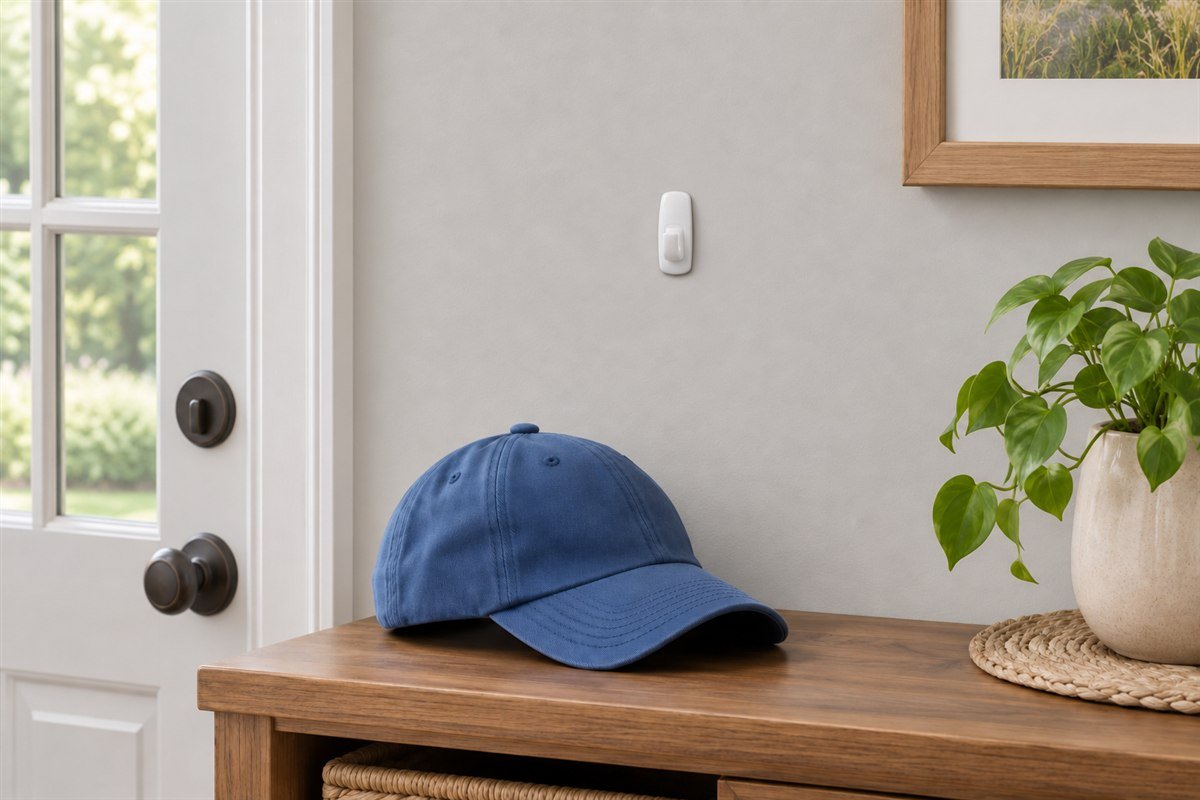 (opens in a new tab)AI-generated setting based on a product reference image.
Amazon US
Command Large Utility Hook 17003ES, white
A simple place for a lightweight everyday item when the wall and load match the instructions.
- 1 large white hook and 2 adhesive strips
- Rated for up to 5 lb per hook
- Removable strip system; follow the exact package directions
Check current price
See the listing for price, availability, shipping and return terms.
View on Amazon US (opens in a new tab)Checked November 15, 2026
Affiliate disclosure: we may earn a commission from purchases, at no extra cost to you.
Leave time for installation
Read the whole package sequence before peeling the liners. Command's instructions for these hook systems specify rubbing alcohol for preparation and firm pressure for 30 seconds. A two-piece hook has an extra backplate step. Allow the stated one-hour wait before loading. Follow the US application and removal guide (opens in a new tab).
Check that the finish tolerates the required preparation. Household cleaners may leave residue, so a recently wiped wall is not automatically ready for adhesive. Keep the instructions for the day you move the hook.
An ordinary indoor model is not a substitute for a bath or outdoor version. Do not hang valuable or irreplaceable items, or place it over a bed. Choose a location where a fallen item is unlikely to cause harm.
Plan the removal while the tab is still visible
Keep the release tab accessible. For this stretch-release system, gently support the hook or backplate and slowly stretch the strip downward, parallel to the wall. Do not yank the hook toward you. Use the distance specified for the actual strip; if the tab breaks, consult the manufacturer's instructions before trying another method.
Removable adhesive is not a promise that every finish will survive every installation. The goal is a convenient place for one suitable item, with a sound surface and instructions you can follow. That small improvement is enough; you do not need to turn the whole entryway into a wall of hooks.